Project Overview
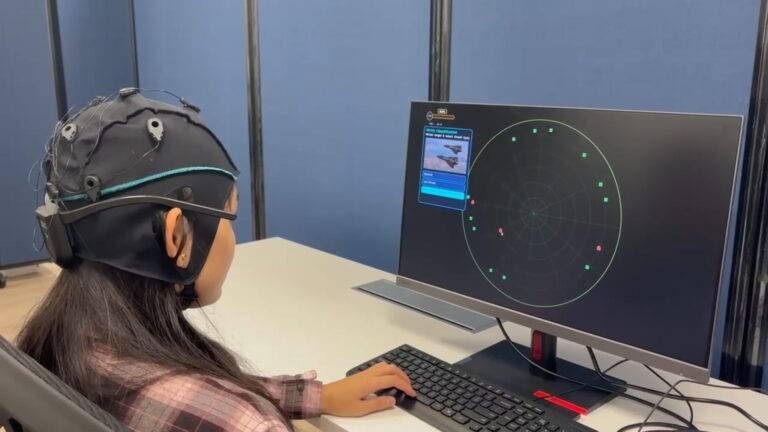
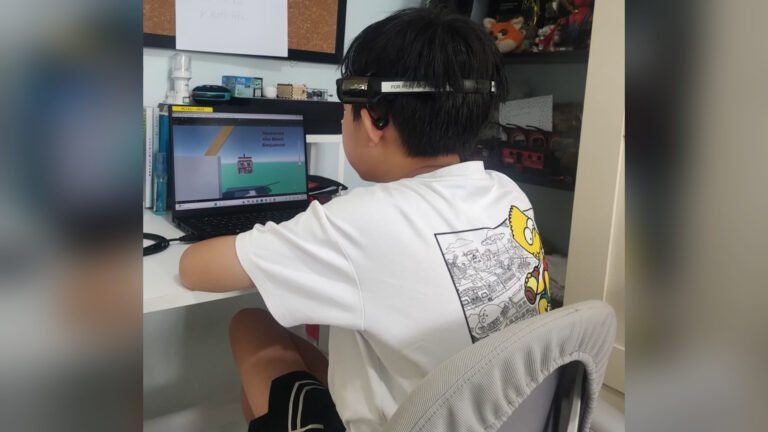
This project develops a non-invasive, online self-correcting Brain–Computer Interface (BCI) for decoding unilateral Motor Imagery (MI) hand movement kinematics from EEG. The system focuses on decoding movement direction and speed, while incorporating transfer learning and Error-related Potentials (ErrPs) towards reliable closed-loop BCI control.
Motivation
Most conventional MI-BCIs focus on bilateral motor imagery, such as left- versus right-hand movements. Decoding more detailed unilateral movement information is challenging because of overlapping cortical activity and substantial EEG variability across subjects and sessions. These factors also increase the amount of user-specific calibration required.
Objectives
- Decode hand movement direction and speed from Motor Imagery EEG.
- Apply Transfer Learning to improve adaptation across tasks, subjects and heterogeneous EEG datasets.
- Detect Error-related Potentials (ErrPs) when users perceive incorrect BCI outputs.
- Integrate MI decoding and ErrP detection towards an online self-correcting closed-loop BCI.
- Extend the framework towards neurorehabilitation applications.
Technical Approach
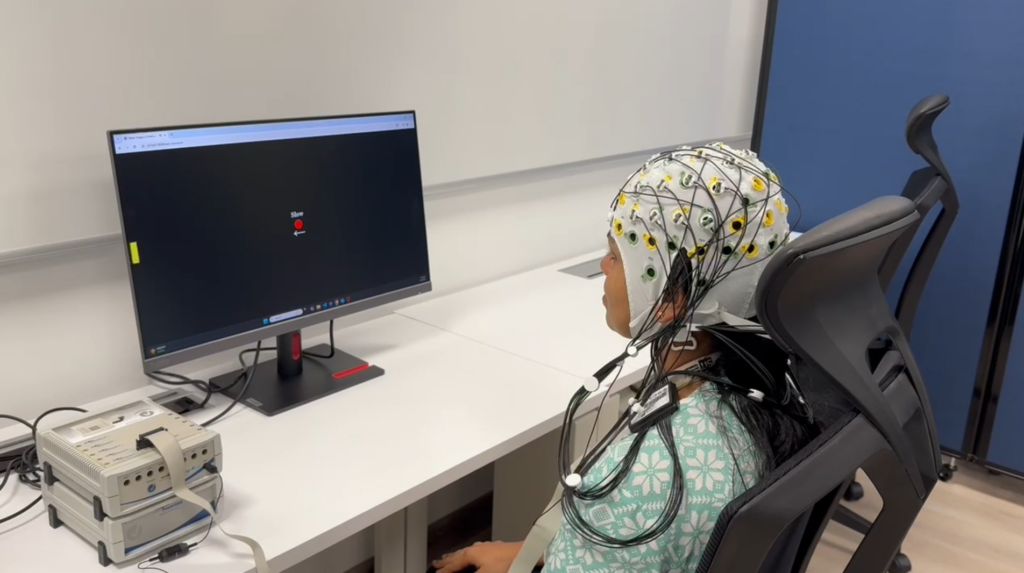
Participants imagine moving their dominant hand in four directions — left, right, up and down — at slow or fast speeds. EEG was recorded from 15 healthy participants using an actiCHamp system at 500 Hz. The recorded signals are processed to decode the intended movement kinematics and provide corresponding feedback.
Transfer Learning is investigated to reuse knowledge across tasks and datasets, reducing the need to train models completely from scratch. The framework explores cross-task, cross-dataset and cross-label adaptation, including transfer between simpler and more complex MI tasks and between direction- and speed-based decoding.
Error-related Potentials provide an additional neural signal indicating when the user perceives an incorrect BCI action. ErrP detection is intended to enable the system to identify erroneous commands and take corrective action, forming the basis of the self-correcting closed loop.
Potential Impact
- More natural BCI control through decoding of hand movement kinematics.
- Reduced subject-specific calibration through transfer learning.
- Improved adaptability across subjects, tasks and EEG datasets.
- Self-correction of erroneous BCI commands using ErrPs.
- Potential application in assistive control and motor neurorehabilitation.